Wednesday, May 3, 2023

Challenging Authority

 In light of my reading on decision theory and the human biases leading to errors, it has led me to think about my relationship with authority.  In the past in my career, I have been accused of not properly respecting authority.  I have always felt that authority should be challenged rather than blindly adhered to.  As a senior engineer, it is my job to assure the best decisions are made.  Since human error is inherent in decisions, those decisions should be questioned.  Additionally, technical authority is bestowed on individuals as a responsibility, not as a position or a reward or a right.  When questioned, those in authority should be considerate, not insulted.  

I'm sure there are those who would wish I would shut up and do what I was told.  That was never going to happen.  I have been silenced by my health.  My hope is that others will take up the cause and continue to challenge authority to make things better.

Forgive the rant.  This has been on my mind for quite some time.  Naturally, authority should be challenged in a respectful manner.  I have always attempted to do so.

Book Review: The Undoing Project by Michael Lewis

 Hi all,  I'm still here, though given the amount of sleep I require, it doesn't seem like I'm here as much.  I did read one book that was quire remarkable, and I recommend it for everyone.


The Undoing Project by Michael Lewis is a biography of two psychologists, Danny Kahneman and Amos Tversky and the work they've done together on decision theory and the natural mistakes made by humans that can impact those decisions.  

Lewis starts trying to show how their work is important.  Lewis uses NBA General Manager Darryl Morey as an example and all the trouble he has experienced trying to determine if players from around the world would make good NBA basketball players. 

The book then goes and looks at Kahneman and Tversky's lives, from their births during and after the Holocaust, through their roles in the military fighting for newly-independent Israel, to their initial academic postings at Hebrew University, where they began their work together.  Most of this work consisted of finding room somewhere and talking through various questions for hours.  They then came up with questionnaires on human choices which they gave to their students, but also to expert economists throughout academia.  Results showed it didn't matter if you were an expert or not, everyone is subject to a set of biases which are best described through a set of heuristics, or rules of thumb.  

These results also showed that people are not naturally rational or logical in their thinking.  For example, people are often biased by context and the narrative surrounding a given situation.  One of the more memorable was the 'Lynda problem.'  A narrative description is given of Lynda showing her to be of liberal mind and interested in women's issues.  The questionnaire then asks which is more likely:

a) Lynda is a bank teller

b) Lynda is a bank teller and a member of the feminist movement

A large majority of people chose (b), which is ridiculous when you think about it from a strictly mathematical perspective.  Clearly, (b) is a subset of (a):  all feminist bank tellers are bank tellers.  (a) should be more likely just because there are more bank tellers than feminist bank tellers.

While all the material on decision theory and biases is interesting, it can be overwhelming to the reader.  I suggest one reads (or listen to on audiobook) the book like a novel, letting the psychology wash over you, getting the general gist but leaving the details for another time.  The book is interesting on a number of levels:  how Kahneman and Tversky came up with their theories; their relationship while building up the actual material; and the personality differences between the two academics -- Kahneman was clearly an introvert who wanted to solve interesting problems versus Tversky, an a-type personality who wanted to prove the theories were right.

Having finished this great story, I plan on learning more about decision heuristics, as documented in Kahneman's later books, including Thinking Fast and Slow.  I think this material is critical for decisions throughout business and life.  I would recommend a similar course of learning for my friends and colleagues.  Michael Lewis' book is a good way to 'easy yourself into' the topic, while being a good interesting read

Friday, March 17, 2023

Song of the Beautiful Journey

 My son Ethan sent me the link to this song.  He said the words expressed how he felt about us now as we move through these last days of my life.  In listening the song, I felt that, at least for me, it spoke to the almost 28 year journey I've had with my wife Stacey.  I also picture this song playing as we walk the backstreets of Sanibel Island before Hurricane Ian.  


I have posted the lyrics below.  Thank you Stacey for the wonderful journey.  Not every day is this beautiful, but more are than not and I wouldn't have it any other way. 


Watch the sunrise along the coast
As we're both getting old
I can't describe what I'm feeling
And all I know is we're going home
So please don't let me go, oh
Don't let me go, oh-oh-oh


And if it's right
I don't care how long it takes
As long as I'm with you
I've got a smile on my face
Save your tears, it'll be okay
All I know is you're here with me
Oh, oh, oh, oh-oh-oh-oh-oh


Watch the sunrise as we're getting old, oh-oh
I can't describe,whoa-oh
I wish I could live through every memory again
Just one more time before we float off in the wind


And all the time we spent
Waiting for the light to take us in
Have been the greatest moments of my life


I don't care how long it takes
As long as I'm with you, I've got a smile on my face
Save your tears, it'll be okay, ay, ay, ay, ay, ay-ay-ay-ay


Yeah, if with me
Oh, oh, oh, oh-oh-oh-oh-oh
I can't describe, oh, oh

Wednesday, March 1, 2023

Sorry, There are no Re-Takes

 It's Okay to have a bad day or make a poor decision.  Just don't do it on one of those days you are taking a test to determine where you will be binned (and thus how you are treated) for the rest of your life...

This happened to my mom a few days ago.  I am so sad, mad, and frustrated but there is nothing I can do about it.  As you may know, my mom fell and fractured her hip.  She was taken to the hospital where they operated and inserted a pin between her femur and hip bone.  They start physical therapy in the hospital, but once the patient has medically recovered, the patient must be transferred to a different facility for rehabilitation where one works towards having the skills to be home again.  In an 'acute rehabilitation' center, the staff works with 4-6 hours a day teaching the body how to walk and perform basic functions.  Focus is on the rehab.  If one is not able to do at least 4 hours of rehab, a patient is released to a 'skilled nursing facility' where they only work rehab with you 2 hours a day.  Focus here is on basic care.

The day (and days) leading up to the transition, my mom made a poor decision.  Although the nursing staff at the hospital explained that pain medication, particularly Morphine, should be used as a tool to manage pain, such that one could work on physical therapy (and meet the 4 hour minimums for acute rehab).  Based on her lifetime of experience, mostly dating back into the 1970s when it was common practice to be heavy-handed on pain meds essentially putting patients into a semi-stupor, pain meds were to be avoided if she could tolerate it.  So, where the average patient was using measured doses of morphine at targeting times, my mom was taking the occasional Tylenol.  Results were predictable.  She could not participate in physical therapy at the hospital to indicate she could meet the 4 hour pre-requisite.  So, poor decision leads to bad day leads to poor outcome.

My mom is now headed to the skilled nursing facility where their rehab staff will work with her two hours a day.  If life were fair, there would be some opportunity to work her way up to more rehab hours, possibly transfer to an acute facility, and eventually work to get home.  Life is not fair.  She can do rehab for those 2 hours but no more.  The facility only has staff to support the two hours (maybe less since staffing in elderly care has been in crisis since COVID).  The rehab folks may prescribe exercises and more walking outside the 2 hours.  However, she won't be allowed to do any walking independently (i.e. without qualified staff) due to safety concerns and regulations.  Also, there is no additional staff to be with her during these times.  There may be some ways to positively impact the situation if family were physically present and willing to strongly advocate for her.  Unfortunately, I am her only son, located several states away, and have terminal cancer.  

What other binning decisions are based on one-time only tests on a given day?

Update:  My mom settled in to the skilled nursing facility.  She is 'sort of'' taking our advice on the pain medication, though she still refuses morphine.  My mother-in-law drove up from VA to check the facility out.  It appeared clean and well organized.  Her overall assessment was that it was 'fine.' The team of nurses will do weekly evaluation on Tuesday as to my mom's progress.  Within 3-4 weeks, they will make decision on what's next - long term care (i.e. nursing home) or go home (if she is mobile and can go up and down steps).  Meeting the 'go home' criteria would look miraculous from where we are now.  

Thursday, February 16, 2023

My Left Turn - Leukemia

My Left Turn


As Fall turned to Winter in 2022, my life took an unexpected left turn.  I began having inflammation in various part of my body - my neck, my back, my shoulders, even my eyes.  What was strange was that the pain would be one place one day and somewhere else the next.  What was going on?  I scheduled numerous doctor's appointments trying to figure this out.  What was more frustrating was I couldn't even get certain tests or specialist appointments until deep into 2023.  I woke up on New Year's Eve and my feet, knees, and hands had all swelled.  My wife Stacey decide that enough was enough and carted me off to the emergency room.  They ran a lot of tests showing nothing, but the ER doctor did not like the looks of my blood tests.  She consulted with an Oncologist and had me admitted to Mary Washington Hospital.  In the meantime, my hands and legs continued to swell such that I could no longer walk nor even get myself to the bathroom.  I spent the worst weekend of my life waiting to get a bone marrow biopsy while having to be changed what seemed like hourly.  Once done, the biopsy confirmed I had Acute Myelomic Leukemia.  At the advice of the Mary Washington Oncologists, I transferred to University of Virginia (UVA) hospital in Charlottesville, one of the top hospitals in the country dealing with Leukemia and bone marrow transplants.

What is Leukemia?

Leukemia is a cancer of the blood.  There is no 'tumor' and the cancer resides within the blood and inside the bones and bone marrow where blood is produced.  Rather than normal blood, Leukemia produces something called blasts.  Left untreated, it will compromise one's immunity system such that some outside infection will kill you.

Science does not know what causes Leukemia.  There is some thought that one is born with it and at some point it is activated.  At the same time, there is no statistical evidence that the disease is genetic, passed from one generation to the next.  Leukemia just happens to some people - a left turn no body wants.

If you want to read more about Leukemia, I suggest you start here.

My Path To 'Cure'

I had some great doctors at UVA.  The best was the lead Oncologist, Dr. El Chaer.  He would only come talk to us when he had something new or worthwhile to say.  Day-to-day, this drove my wife and I nuts.  But, in retrospect, I appreciate it.  The quality of our fewer conversations was incredible.  The process for Leukemia treatment is highly individualized and tailored to the specifics of the disease as characterized by analysis of the biopsy results.  That analysis was performed by the Mayo Clinic and fed back to Dr. El Chaer.  More information flowed back over time as more was known.

The process started with a round of 'infusion' chemotherapy.  The goal here was to kill off most everything in my bone marrow, bringing my immune system down to nothing.  They then wait a week, take another biopsy, and go from there based on results (is cancer gone, almost gone, still there).  I was quite successful in this stage, eliminating ~98% of the cancer.  I also managed to avoid any major infections while my immune system was down.  My hemoglobin/platelet production picked up quite quickly, allowing me to go home from the hospital on 1 Feb, after a month in the hospital.  Normal course would have me meet with Dr. El Chaer in clinic to determine the next step.  I intervened before that, but let's not get ahead of ourselves.

There was some other work that got done in the hospital and I don't want to minimize that.  I entered UVA essentially bed-ridden, my legs, feet, and hands swollen and unable to operate.  They gave me medicine to drain off the swelling but getting to move around on my own was work.  The nurses would not let me just go on my own.  The fear of me falling was great.  Still I managed to progress from getting out of bed and sitting in  a chair, to moving around the room with a walker, to being able to get into the bathroom on my own (that was a big one).  I also managed to balance without the walker and get up and down consistently.  I cannot thank the Physical and Occupational Therapy staff enough for helping me push past both real and perceived limitations and being a capable human being again.

Genetic Markers and Tendencies

Using latest enhancements in both oncology and genetics, doctors are able to characterize an individuals Leukemia based on genetic mutations found from the bone biopsy.  These mutations indicate tendencies for how the Leukemia will behave over time.  My results came back with 6 mutations (average patient has one or two).  Of those, three were particularly bad.  The gist is that my Leukemia is nasty and has statistical tendency to come back even after treatments (chemo, bone marrow transplant, etc).  

Having mutations as I do essentially dictates an aggressive treatment strategy.  Thus, to fight it one should plan for multiple rounds of chemotherapy, both in- and out-patient, as well as bone marrow transplant.  This amounts to three-year battle if there are no set-backs.  Of course, mutations would dictate set-backs are likely.  So, as options were laid to me, best chance of success was to throw all my chips on the table against less than favorable odds.  I could be less aggressive, but that made odds even worse (in my mind a waste of time and resources).

The other option was to stop the active treatment, manage my pain and discomfort, and accept death when it comes.  This comes with the advantage of spending my time with my family vice in and out of hospitals while maximizing my quality of life for my remaining time.

Decision Factors

As I faced the decision of way forward, the following were factors:

  •     Although my life has been far from perfect, I have no regrets and no 'burning' goals I need to meet.  I have endeavored build the foundation in my children for them to become productive and happy adults.  Aside from enforcing those teachings/efforts, I don't see anything drastically different that needs to be done.
  • I cherish the relationships and resultant experiences I have had across my 58 years of life.  Though I have many small threads of incompletions and relationships I've not cultivated as best I could, nothing bubbles to the surface as a major incompletion - I can comfortably go to my grave today feeling I've said all I have to say.  This goes not only for my peers, but also with God.
  • My life was coming to a major  cross-road in 2025 anyway.  That year marks a) my 60th birthday along with various retirement and Social Security eligibilities that come with reaching that age, b) 20 year anniversary with the Government and eligibilities that come with that, and c) my daughter's graduation from High School transitioning Stacey and I into 'empty-nesters.'  In my mind this would bring a major career transition.  I planned to enhance my technical skills, take job in commercial software development (no Govt. contracts, minimal bureaucracy, no denial  of technology due to stupid rules, and flexibility based on what I as an employee wanted and actual product needs of my employer). and work mostly from home, wherever I chose that to be.  You can throw that out the window if I am doing chemo -- no time, no energy, and all income feeding the medical bills.  So, I really have to accept that future is now dead.
  • Lastly, what are the long term repercussions, financial and otherwise, of courses of action.  Medical events are the number one cause of bankruptcy in they US.  A small car accident with six month hospital stay will destroy the average family's finances.  Yes, I have medical insurance.  However, even having to pay 20% of $1M will wipe out an entire year of my salary.  Having state of the art treatment from UVA is great, but each time some doctor entered my room, there was a 'cha-ching' somewhere.  These costs don't go away when I die and they don't care if treatment is successful or not.  I could easily eliminate my children's opportunity for an education by putting on my armor and going to war with my Leukemia.  Why should I be such a burden only to die in failure two or three years from now?
  • As Stacey walked the halls while visiting me at UVA, she had two occasions to overhear cancer wives begging doctors to stop the treatments and let their husbands have peace.  In the first few days at UVA, the social worker signed me up to have a volunteer who had similar Leukemia experiences to mine come talk to me for encouragement.  They never darkened my door.  Doctors quoted me plenty of statistics but evidence of success, to my engineering brain, was paltry.  Preachers will expound all the time how God will give miracles.  If they were that common, they wouldn't be miracles.  

With all this I have decided to forego any additional treatments, put myself under hospice care to keep me comfortable as I approach my death.  As you are reading this, I realize you are putting it through your own filters and reaching conclusions different from mine.  I just put this forward as my reasoning and decisions.  I am not right but am comfortable in my decisions.  I just wanted to document my process.

I plan to write more blog posts on more general and philosophical topics as I try to put my life into some kind of perspective.  Thanks for sharing in my journey.

Dan 


Thursday, November 3, 2022

Writing as a tool, not just documentation


I listened to this podcast several weeks ago and got an insight into a better way to look a writing. Maybe it will motivate me to write more blog posts. I spend so much time on my job writing to convey what I know. In the course of writing it, I always need to go back to source material or Google to refine the ideas. In doing so, I am improving my understanding. The idea in this interview takes this a step further: Write about something you don't understand, employ different areas of your brain, and come to understanding of that topic. Below is partial transcript of podcast with the relevant topic. I encourage you to listen to the whole thing and then write down your own opinions about it.

From Re:Thinking with Adam Grant Podcast, Season 1, Episode 8, October 11, 2022- How Celeste Ng Writes Fiery Prose: Apple Spotify Transcript


Celeste Ng: I always write from a place of not understanding versus I think some of what you're talking about where, especially in the non-fiction world, you research, you learn about something, you understand it, and then you write about it. Right? To share that, for me, it's almost, it's almost the reverse. There's something that's confusing me. I'm like, “Why would somebody do that? How did you get yourself into the situation? Why are you like this?” And writing for me is my way of figuring out what that is. And so by the end, when I've finished writing, then I have figured out what it is it, it can't go the other way for me. And I think that's one of the big differences between my process and sort of what you're describing.

Adam Grant: I think that a lot of people see writing as a vehicle for communicating ideas. But it's also a tool for crystallizing ideas.

Adam Grant: So often I find that what's fuzzy in my head becomes clear on the page. And that when I try to write down, you know, an inkling, it could become an insight, or in some cases, I'll see the gap in my knowledge or my logic, or when I'm trying to spell something out in writing, I have to articulate my assumptions. I have to address counterarguments, and I guess I think a lot about the observation of how can I know what I think until I see what I say.

Adam Grant: Or until I see what I write. And I think we, we do enact our way into our thoughts through writing. And I guess one of the things that makes me curious about is I meet a lot of people who say, “I'm not a writer”, and therefore they don't write. And it's kind of like saying, “Well, I'm not a public speaker on stage, so therefore I don't talk”, right? It’s like, wait, you're, you're missing the point that writing is a tool for thinking, and if you wanna be a better thinker, you should write more often. It sharpens your reasoning. What do you make of that?

Celeste Ng: writing is a way of thinking and that many of us, when we go to high school, you're taught to do it like you know, you should have your whole ideas, and then you basically just dictate them to yourself and write 'em down on the piece of paper.

Celeste Ng: Whereas I think it's much more what you said. You articulate something on the page and it crystallizes something that you hadn't been able to say. Or you write down what you think you know, and then you read it over and you go, “Well, but wait, what about this?” And you start to make it more complex. And so that was one thing that I really tried to teach them that, you know, they would write a draft and they'd be like, “I'm done.” And I'm like, “No, no, no. This is your thinking through, right? This is where you're starting to think.” Um, so I, I, I really agree with you on that. I really think that writing is, it's odd because it is both the skill you are trying to get, and in order to get it, you have to do it. Right? It's this thing that you learn to do. By doing it.

Adam Grant: Which is a paradox. I think I, I've watched a lot of people get away with… Well, let, let, let's put it this way. I, I've seen too many people get away with faulty logic because they’re charismatic speakers. And one of the things I love about putting ideas on a page is, is it forces ideas to live or die more on their merits, right? As opposed to how they're presented. And I think so often you find that, that somebody who's a captivating talker, uh, struggles to articulate their insight on the page. And that doesn't mean they can't write. For me, it means that their unclear writing is a sign of unclear thinking, and they should stop using their charisma as a crutch, and, you know, force themselves to articulate ideas in a medium that doesn't benefit from, you know, their elocution or whatever skill is allowing them to be persuasive interpersonally.

Celeste Ng: Yeah, I think that's true because, you know, personal charm is real. Right? And like you said, if you write things down on the page, you take one of those variables out of the equation, you take away the variable of whatever your personal charisma or your, you know, your dramatic reading, whatever it is, your flare. And the, uh, you know, you can still certainly do a lot of pyrotechnics with your prose, but in some ways it, it takes away that layer of performance. And the other thing is that I think unlike something that is heard, like a speech, what's on the page is experienced at the reader's own pace. You can read it, and then they can read it again. Right? And they can read it again. And if they keep reading it and they're like, “I don't think you're saying what you think, you're saying.” They caught you. Right? And so in a way, like you say it, it kind of separates what you're saying from the act of saying it. It separates it from time and it has to hold up on its own.

Saturday, January 23, 2021

Achieving Your Objectives in 3, 2, 1

 I spend a lot of time reading articles by 'thought leaders.'  It is even more cool when a friend and colleague publishes an article of that caliber.  Please check out Noam Oz's article using techniques he learned in Ju Jitsu in one's career and projects.

Achieving Your Objectives in 3, 2, 1


Tuesday, March 17, 2020

Time of Opportunity

"THESE are the times that try men's souls. The summer soldier and the sunshine patriot will, in this crisis, shrink from the service of their country; but he that stands by it now, deserves the love and thanks of man and woman."  Thomas Payne

In these times of social distancing and impending impacts of the time, society is bound to change.  We can move one of two ways:  we can become fearful and selfish or we can rise to a higher level of responsibility.  We need to help people.  The traditional means of service come through groups gathered together in mutual support.  That won't work this time.  This time we need to innovate and create novel ways of moving our society forward.  I don't know what those means are, but we need to find them.

I've spent most of my career supporting the Department of Defense.  We always said the bureaucracy would be put away if we ever got into a real war.  Well, it wasn't a war.  It's a virus.  I have envied the 'Great Generation' for having a purpose and chance to make an impact.  Now we have that opportunity.  Let's not waste it.

Saturday, January 11, 2020

2020 Reading List


Starting in the Fall of 2019, I began one of my periods of intense reading.  Most of the books are business or self-improvement books.  As we start 2020, I want to keep track of what I read and what I want to read.  I would like to do reviews of those books also.  I've made promises like that before on the blog and not stuck to them.  Oh well!

I plan to update this list as the year progresses.

Happy New Year!

Books Read in 2020


  • Death by Meeting by Patrick Lencioni
  • The Four Hour Body by Tim Ferriss
  • The One Minute Workout by Martin Gibala
  • Talking to Strangers by Malcolm Gladwell
  • The Death of Ivan Ilyich by Leo Tolstoy
  • The Infinite Game by Simon Sinek (in progress)

Books To Read
  • Indistractable: How to Control Your Attention by Nir Eyal

Tuesday, September 24, 2019

Dealing with 'Management by Intimidation'


We often consider them bullies.  They instill fear in our colleagues and our leaders.  Our natural instinct is to avoid them.  But that may not be the best way to deal with them.

If you like to use "Management by Intimidation" as a tactic or have someone working for you who does, I think you need to eliminate this behavior.  It is detrimental to your whole organization.  I point you to  Robert Sutton's book, The No A**hole Rule to deal with this.  Unfortunately, many times you're not in a position to change these people.  You just have to deal with them.


When I was in a previous position, I encountered the biggest bully I've worked around.  He worked in the Belgium office.  He would rant and rave, belittling the work of everyone in our office.  All the U.S. managers were afraid of him, going out of their way to avoid confrontation with him.  I thought he was the definition of an a**hole.  I later had the chance to collaborate with some engineers who worked for him.  They loved him.  I decided I needed to watch more closely.  That's when I realized that the bullying was a technique more than just his personality.  He was quick to criticize anyone who didn't work for him while defending his own, justified or not.  I originally thought he hated Americans.  But, as I continued to observe, I realized he just didn't respect them, presumably because they wouldn't stand up to him.  Lastly, he was very intelligent in finding the problems and faults to exploit with intimidation, putting others on the defensive since, to some degree, he was right.

So, given the bullying is a purposeful tactic for doing business, how can we effectively deal with this to achieve successful outcomes?

1. Temper your emotions.  Intimidation is intended to cause fear, anger, and shame.  Keep that in mind and don't fall into the trap.

2. Listen.  Understand the bully's point.  Rationality and logic can prevail, but only if you can show the bully you understand the logic beneath the attack.

3.  Stand up for yourself and others.  The only way to render the attack ineffective is to thoughtfully engage.  Remember, the bully has no respect for those that shy away.  This will be inherently uncomfortable for you.  Don't expect a whole lot of help from colleagues, as they will tend to want to avoid conflict.

4.  Move forward with the end in mind.  Once you've made your stand, then you can look toward common goals and "win - win" -- maybe. 

This is not a fun game.  But sometimes you have to play.  Be brave and stick to your principles!

Saturday, May 9, 2015

You're Either Part of the Solution or Part of the Problem

"You're either part of the solution or part of the problem."


That saying is one of my favorites.  First, I would ask you be careful using this saying.  It can easily be taken as a criticism on insult, depending on when you use it.  In fact, I rarely will say this to anyone.

The value in this saying is to keep it to one's self and use it as an evaluation criteria for whatever you are doing.  As human beings, we often partake in destructive behavior.  I must admit that I have picked a fight with my wife for no good reason.  More often I've complained out of my frustration about some situation.  I've tried to train myself to stop, and ask "am I part of the solution or part of the problem?"

It's not a good feeling to realize you're part of the problem.  Don't beat yourself up.  Just stop!

Are YOU part of the solution or part of the problem?

Thursday, December 11, 2014

All I Want for Chrismas is My Friendship Back

Dear Santa Clause,

I write you this year with a short Christmas list.  In fact it only has one item on it.  I want to re-kindle a lost friendship.

Back in the eighties, when I was in college, I met an incredible person.  She taught me about joy, optimism, and love of life.  She showed me the world was a lot bigger than what I was seeing through my tunnel vision.  We had the most wonderful of conversations.

Unfortunately, in the course of all that, I fell in love with her.  That messed everything up.  Through the tangle of emotions and circumstance, we parted.  Over the years, I have summoned her memory as inspiration countless times.  I hold her in the highest esteem. 

Earlier this year, I reached out to her through social media and tried to reconnect.  I am secure in my marriage and only wish to have a friendship that will enrich both our lives.  Unfortunately, I was dumb in my approach.  I sent her a Facebook message.  In it, I wrote she could get back to me if she wanted to, but I would leave her alone and not badger if there was no response.  Of course, I have no idea if she even saw the message...

Santa, if your magic powers really exist, let Michelle see this post.  Help her understand my best of intentions and have her reach out to me.

Yours,

Dan

Merry Christmas to All!

Friday, July 25, 2014

Diversity T-Shirt Day ???

So, today is 'Diversity T-shirt Day' at work.  Notice went out for the following:

Wear a T-shirt that displays what is important in your life whether it be a hobby, an affiliation, a belief, a way of life, etc.
Remember, "Diversity is...You" so everyone has something to contribute!

As I walked the halls this morning, I saw two people wearing Washington Redskin t-shirts.  This says something, though I'm not quite sure what...

Thursday, July 24, 2014

The Wolfbane Manifesto

Gretchen RubenI was reading Gretchen Ruben's
blog post:  "Do You Love Manifestos as Much as I Do? Here’s My Habits Manifesto."  It got me to thinking...


What follows is not so much a manifesto as it is a set of rules I've come up with over the course of my career.  Some of these rules have hard-learned lessons behind them.  I've broken them up into categories to give them some kind of order.

My plan is to write blog posts about each one and link to them from here. 


Working In General
  • When starting a new job, hit the ground running.
  • If something doesn't seem right, speak up.
  • Fixin' to work on something is a form of procrastination.
  • Step back and look at issues from the other side.  Don't let emotion blind you.
  • You cannot know everything, but you can know where to look or who to ask.


SW Development
  • You can write software to do anything given enough time and money.
  • If you are stuck on a problem, walk away, clear your mind, and then look at it fresh.  If that doesn't work, explain the problem to someone else.  You will most likely solve it just from the telling.
  • Automation Rule of Three:  If you do it once, its an anomaly.  If you do it twice, it could be a coincidence.  If you do it a third time, you should automate because four and five are sure to follow.
  • The software is not done until the last user is dead.

Leadership and Working with People

  • Never ask someone to do something you are not willing (regardless of being able) to do yourself.
  • You need to manage up and manage down.
  • Everyone has something to contribute.

Wednesday, July 23, 2014

Where does Wolfbane come from?


Over the years, I'be been asked where the name Wolfbane comes from.  I was given this name in High School and many of my friends from that time still call me that.  By the way, there is a rule:  YOU CANNOT SET YOUR OWN NICKNAME!  

Wikipedia defines 'wolfsbane' as the plant Aconitum.  It contains a toxin that when extracted was historically used to kill wolves.  This probably had nothing to do with my nickname.

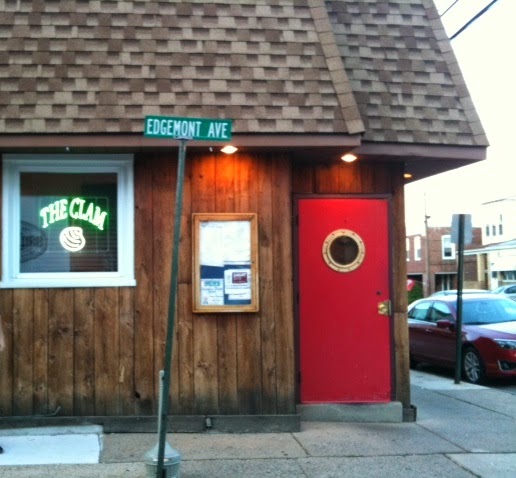
The nickname thing started at a restaurant in Clifton Heights named The Clam Tavern.  Everyone had a nickname:  Tonto, Squal, Gino, and others.  Mine was given to me by Louis Louvinere who started by calling me 'Hane-bane' then 'banes' then finally wolfbane.

This was enhanced by my 'songs.'  The big ones were 'Hungry like the Wolbane' by  Duran Duran and 'Wolfbane's in London' by Warren Zevon.  The other was David Bowie's "Fame."  Listen to the words and substitute Bane for Fame.


Bane, he's a man who takes things over
Bane, let him loose, he's hard to swallow
Bane, puts you there where things are hollow
Bane

Bane, he's not a brain, he's got the flame
That burns your change to keep you insane
Bane

Bane, what you like is in the limo
Bane, what you get is no tomorrow
Bane, what you need you have to borrow
Bane

Bane, "Nien! It's mine!" is just his line
To bind your time, it drives you to crime
Bane

Bane, Bane, Bane, Bane, Bane, Bane ...


This is all silly high school stuff, but at least it shows creativity on the part of my friends.  As my two sons reach the age for nicknames, I dread the idea of either of them being called 'E-Ho.'

Monday, July 21, 2014

Another day in Government Paradise

You know you are in a bad conversation when the words "but Dan, this is the government!" are said five times

Tuesday, July 8, 2014

Team Honored for Impact on New Combat Systems Acquisition Process


 My team received this award recently.  You are probably better off clicking on the link below to read.  It's nice to be recognized for what took up over a year of my career.

Aegis Excellence Awards 014


Thursday, February 6, 2014

Taking On Cancer

Being a lifelong Phillies fan, I was saddened to hear that Curt Schilling was diagnosed with cancer.  Schilling became one of the top pitchers in Major League Baseball during his time with the Phillies, pitching a complete winning game in the 1993 World Series against the Blue Jays.  Reportedly, Schilling was not well liked by some of his teammates and seen as distant and somewhat pompous.  Having never met him, I can't really speak to that.  I can say that he was tough and a great competitor .  He will need all of his determination in the fight he is about to undertake.

His plight reminds me of similar battles fought by two other tough, competitive men:

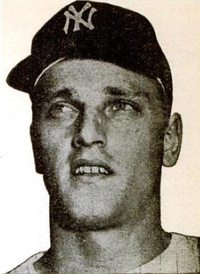
Roger Maris had a long and successful Major League career as well.  Most notable was his 1961 season where he broke Babe Ruth's single season home run record while enduring the scorn of New York Yankees fans and sports writers, who would have preferred the record be broken by Yankee legend Mickey Mantle.  Roger Maris was diagnosed with Hodgkin's lymphoma in 1983 and passed away in December of 1985.

Daniel W. Heaney, my father, was an ex-Army sergeant who was considered as tough as they came.  He could not stand to lose at anything.  I thought his head would blow off his neck when my mother would put down all her cards and beat him at 500 rummy.  Rather than let his young son win at arm wrestling, he would hold his arm steady, not allowing me to budge it at all, but waiting till I gave up rather than pushing my scrawny arm down to the table.  He found it almost impossible to say 'I love you' because he had been taught that such a gesture was a sign of weakness.  My father was diagnosed with lymphoma around 1981.  The cancer was too advanced for radiation and so chemotherapy was the only treatment.  I had just gotten my driver's license at the time and would drive him to the hospital for his treatments.  The treatments made him so sick they literally broke him down.  He would sit at the kitchen table and stare blankly into space, he was incapable of doing anything else.

By 1983, the doctors declared he was in remission.  However, the treatment had taken its toll.  I don't think my father ever felt 'good' again.  In 1985, I came home from college one night to find my father once again sitting at that same kitchen table.  He was obviously upset.  I asked him why.  He had read about Roger Maris' death.  "How can a man like that be gone, and I am still here?" he asked.  I had no answers for him.  But I had gained an appreciation for the humanity inside the hard shell my dad put between himself and the world.  The proceeding years saw a deepening in the relationship and friendship between the two us.  Part can be attributed to my maturing into adulthood.  But part also came from his being broken down by the disease and its treatment. 

In 1993, my father, a lifelong smoker, was diagnosed with lung cancer.  Thanks to his fight with lymphoma, chemo was no longer an option.  Radiation proved ineffective.  My father passed away in February of 95.  Before his death, he got himself straight with God and found his peace.

One might ask if it was worth the agony of fighting the cancer when he would succumb to another cancer later.  Well, I cherish those ten years with my dad beyond expression.  I know he felt the same.  So, for Curt Schilling I say "saddle up!"  You are in for the battle of your life.  I wish you the best and hope that you come out the other side!

Wednesday, February 5, 2014

Government Stuff

When I first started working for the Government, someone (cannot remember who) handed me a sheet of paper with a list of vernacular, or stuff that people say in various meetings and situations.  I have added to the original list, though I do not claim authorship.

Hard Stuff:
Trying to put lipstick on a pig
Juggling cotton balls in a hurricane
Pushing a rope
Trying to unscramble eggs
Tough nut to crack
Boiling the ocean

Easy Stuff:
Low Hanging Fruit

Getting stuck in the small stuff:
Pole vaulting over mouse turds
Searching for head lice
Stuck down in the weeds
Nitnoids

...The big stuff:
Big elephant in the room
Camel's nose sticking out of the tent
Long pole in the tent

Unhappy Stuff:
I don't mean to pee in your Cheerios

Programmatic Stuff:
Budget Austerity
Rice Bowl
Run it up the flagpole
Cross-pollinate
Re-invent the wheel
Breaking the stove pipes
Capture the subset
Birthing a program
Preacher in a parachute
A/n {insert saying} solution (e.g. A six sigma solution or a 90% solution)

Too Much Stuff:
Eat the elephant in one bite
Drinking from the fire hose

How to do Stuff:
Skin the cat from both ends
Peel the onion
Build-a-little, test-a-little
Mr. Potato Head approach
Chasing the ghost turd
Basting the turkeyAssume the spherical chicken

Source of stuff:
Bellybutton

How to think about stuff
Outside-the-box
Motherhood and apple pie

Random Stuff:
Cheese-eating Surrender Monkey
Cats & Dogs
Cut somebody's ear off
Is that a north-south head nod?
The self-licking ice cream cone
Slower than molasses running up-hill on a cold day
Axis of Weasils
Negadelphian
Self-Healing Software

Friday, January 24, 2014

Happy Anniversary to Me!

Ten years ago today I was in a hospital bed wondering if I would have a future.  They had brought me into the hospital in an ambulance after having bouts of excruciating stomach pain.  I had been having such issues for six months prior.  Now the doctors were ordering  a litany of tests:  X-Rays, CT scan, high resolution radioactive dyes, and the like.  Finally, they discovered something in my intestine.  Not sure what it was, I was visited by many different specialists with lots of theories.  Eventually, they ended up operating on me, removing some four feet of my intestines.  They discovered a 'mass,' non-cancerous that had grown in the intestine.  Recovery was difficult but I got myself back on my feet.  Needless to say, my family and friends feared for my life.  Somehow, I knew in my heart I wasn't going to die.  Still, it made for much introspection and reflection on what was important to me in my life.

What did I learn?

  • My family is precious to me.  This moment can only happen once, right now.  A year from now, I and my children will be a year older.  For me, that might not be much of a difference, but for them it is a significant percentage of their current lives.  Who is to say what how some seed planted in a conversation today will grow over time?  I have cherished my time with Ethan and Eli as they were young boys, with Cub Scouts, traveling to various places and exploring the experiences, and just talking about stuff.  I've gotten to experience watching a very active little girl grow and learn.  I have gotten to share everything with my best friend and constant companion, Stacey.  
  • My friendships are important to me as well.  A great soup is not made by any one ingredient.  It unique taste comes from the blend of all the different ingredients.  Life is made such by the people in it.  What's even better is that the flavor and influence lasts over time.  I have been blessed by those souls who have entered and exited my life. 
  •  I do not control my own destiny.  When a door opens, I MAY get to choose to enter or not, but I don't get to choose the doors.  I will trust God to do that part for me.
  • Lastly, I cannot kill yourself stressing over the problems.  There is some school of thought that the mass grew as a result of stress.  I was under considerable stress from my job at that time.  I also tend to clench my stomach when I am stressed.  I must hand my worries off to God for I really can do little about them.  I'm still working on this one.

Happy anniversary to me.  I'm still kicking.  I will continue to try to make a difference.and cherish the gifts I have been given!